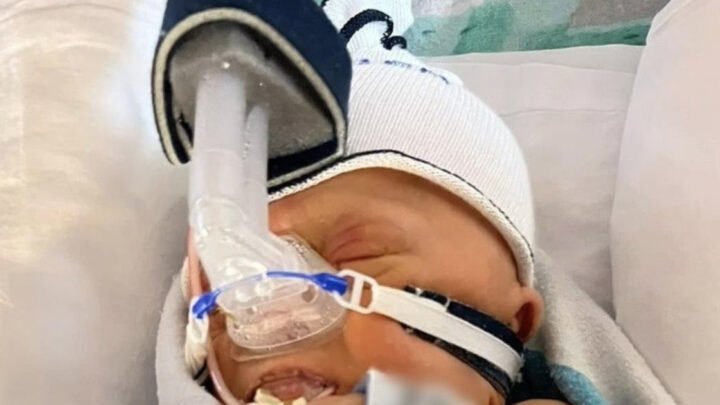
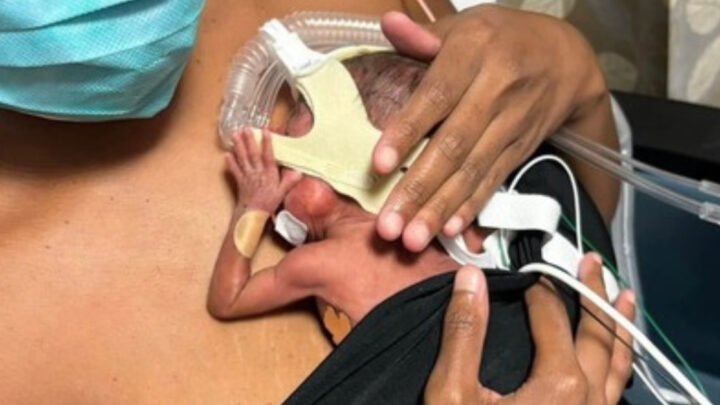
24 Week Preemie: Survival, NICU Care, and What to Expect
28-Week Preemie Mom & Founder of PreemieLove at PreemieLove
About this guide: Preemie Love is a parent resource, not a medical practice. This guide explains what parents commonly see when a baby is born at 24 weeks. It is not medical advice. Babies born this early are very different from one another, and your baby’s NICU team is the best source of answers about your baby. Read our medical disclaimer.
Last reviewed: November 26, 2026. Facts checked against the American Academy of Pediatrics (AAP), the American College of Obstetricians and Gynecologists (ACOG), CDC, WHO, and NIH-funded research.
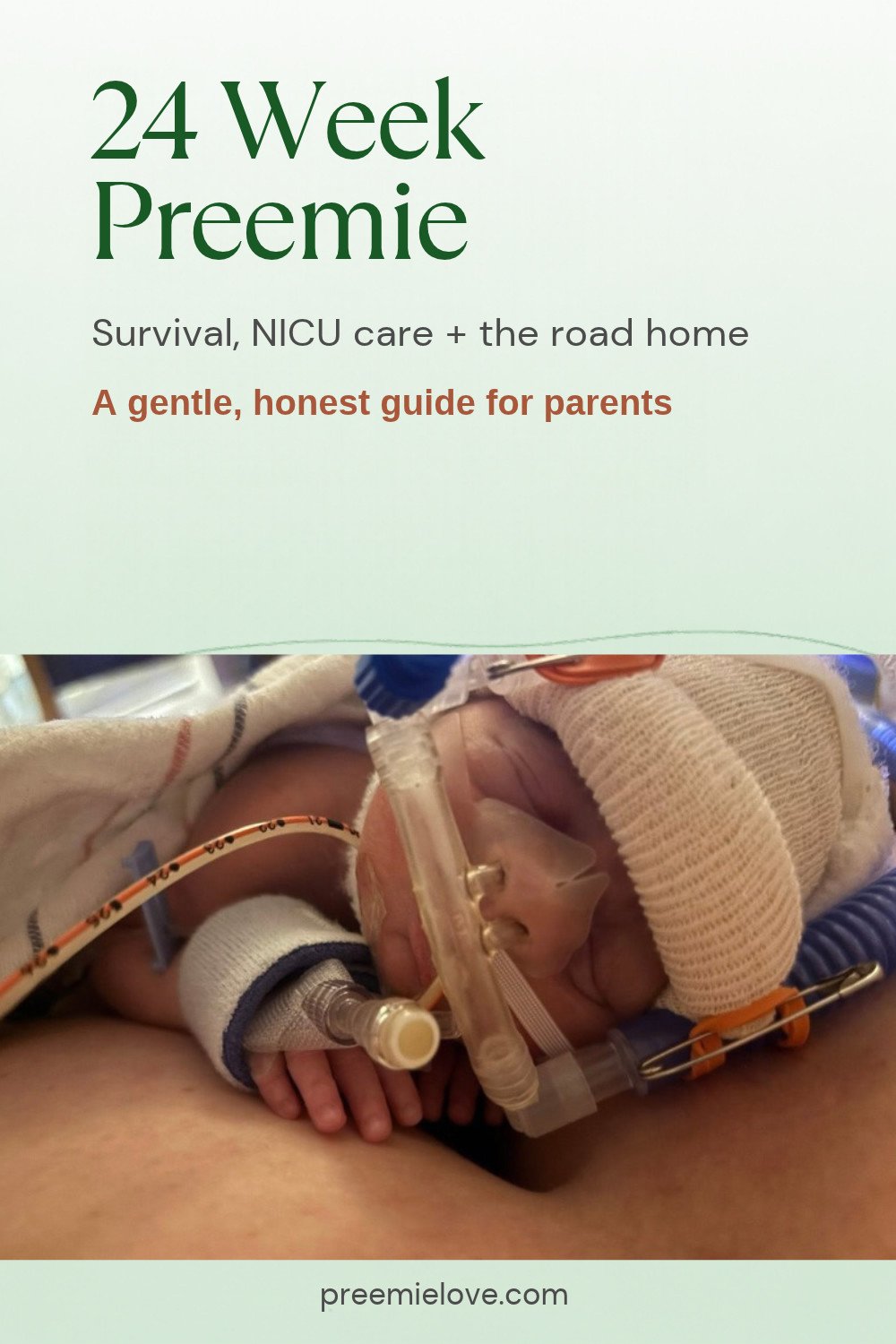
Twenty-four weeks is very early. A baby born now weighs about as much as a bottle of water, has skin so thin you can see the veins, and needs help with almost everything: breathing, staying warm, eating, fighting germs.
If this is your baby, you may be feeling terror and love in the same breath. Both are normal. This guide tries to be what many parents told us they needed in those first days: honest about the risks, clear about what happens next, and kind.
What is a 24 week preemie?
A full-term pregnancy is counted as 40 weeks. A baby born at 24 weeks arrives about 16 weeks, or 4 months, early.
Doctors call babies born before 28 weeks extremely preterm. Many parents and nurses also use the word “micro preemie.” Births between about 20 and 26 weeks are also called periviable, which means near the limit of when a baby can survive outside the womb with intensive care.
At 24 weeks, the lungs have only just started to form the tiny air sacs needed to breathe. The skin, brain, eyes, and gut are all very immature. That is why care at this age is so intensive, and why outcomes vary so much from baby to baby.
What is the survival rate for a baby born at 24 weeks?
The best recent U.S. data come from the NIH-funded Neonatal Research Network, which followed more than 10,000 babies born at 22 to 28 weeks at 19 academic hospitals. In that study, published in JAMA in 2022:
- 69.9% of all babies born alive at 24 weeks survived to go home (or to 1 year of age).
- Among babies who received active intensive care from birth, 71.4% survived.
- Survival for extremely preterm babies overall improved compared with babies born in 2008 to 2012.
These are averages from large teaching hospitals. Your baby’s own chances depend on more than the week of birth, including birth weight, whether steroid shots were given before birth, being a single baby or a twin, and how your baby responds in the first days. Your neonatologist can talk with you about what they are seeing for your child.
How big is a 24 week preemie?
Based on the 2025 Fenton preterm size charts, most babies born at 24 weeks fall in this range (10th to 90th percentile):
| Typical range in grams | About the same in pounds | |
|---|---|---|
| Girls born at 24 weeks | 542 to 774 g | 1 lb 3 oz to 1 lb 11 oz |
| Boys born at 24 weeks | 571 to 820 g | 1 lb 4 oz to 1 lb 13 oz |
Most babies lose a little weight in the first days before they start to grow. Your baby’s team will track weight, length, and head size closely.
What to expect in the NICU with a 24 weeker
The first days are often the most intense. Many parents describe a “rollercoaster”: good days and hard days, steps forward and steps back. Our plain-English NICU glossary explains the words you will hear, and our NICU parent questions checklist helps you keep track of what to ask at rounds.
Breathing
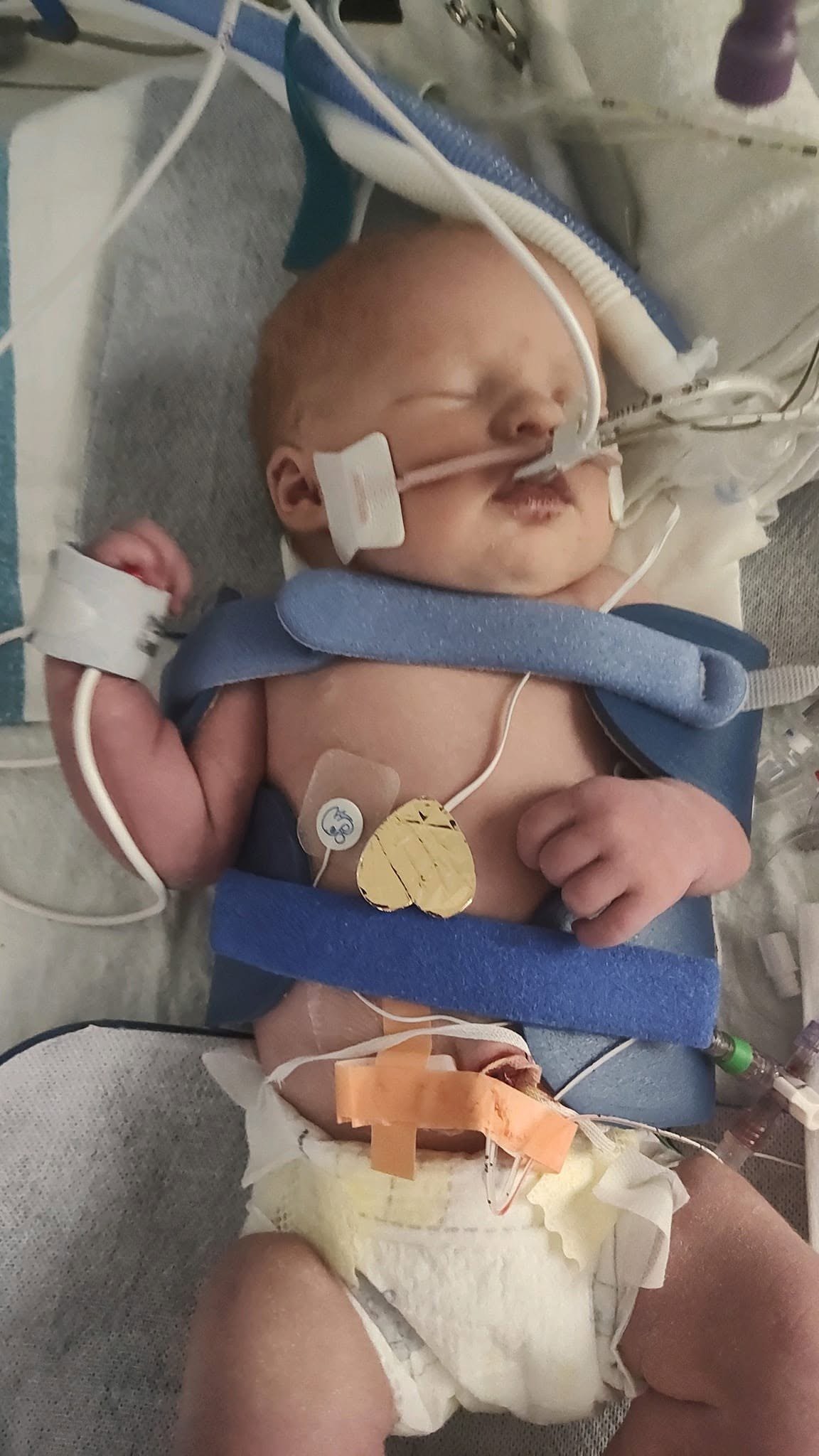
Most babies born at 24 weeks need a breathing tube and a ventilator at first, and many receive surfactant medicine to help the air sacs open. Over weeks, the team tries to step down to gentler support such as CPAP. Breathing pauses (apnea of prematurity) are expected, and most babies get a medicine called caffeine.
Because the lungs are so young, many 24 weekers develop bronchopulmonary dysplasia (BPD), also called chronic lung disease of prematurity. In the JAMA study, 76.2% of babies born at 24 weeks still needed extra oxygen at 36 weeks postmenstrual age. Many improve as their lungs grow, and some go home with a little oxygen.
Feeding
At first, all nutrition comes through an IV. Within days, tiny amounts of milk start through a thin feeding tube. Many NICUs also place drops of mother’s colostrum in the baby’s mouth as part of daily care.
Your milk matters enormously at this age. The AAP recommends that premature babies get their mother’s own milk whenever possible, and it is linked with a lower risk of NEC (necrotizing enterocolitis), a serious bowel problem. If your milk is not available, the AAP recommends pasteurized donor milk from a screened milk bank. Start pumping as soon as you can after birth, even if you only get drops. Our pumping and bottle gear checklist for NICU parents lists what helps.
Eating by mouth usually starts much later, once a baby can coordinate sucking, swallowing, and breathing, which typically develops between about 32 and 34 weeks.
Skin, warmth, and touch
A 24 weeker’s skin is very thin and loses heat and water easily. Your baby will live in a warm, humid isolette. Ask your nurse how and when you can touch your baby. Many tiny babies are calmer with a still, cupped hand resting on the head and feet than with stroking.
Skin-to-skin (kangaroo) care
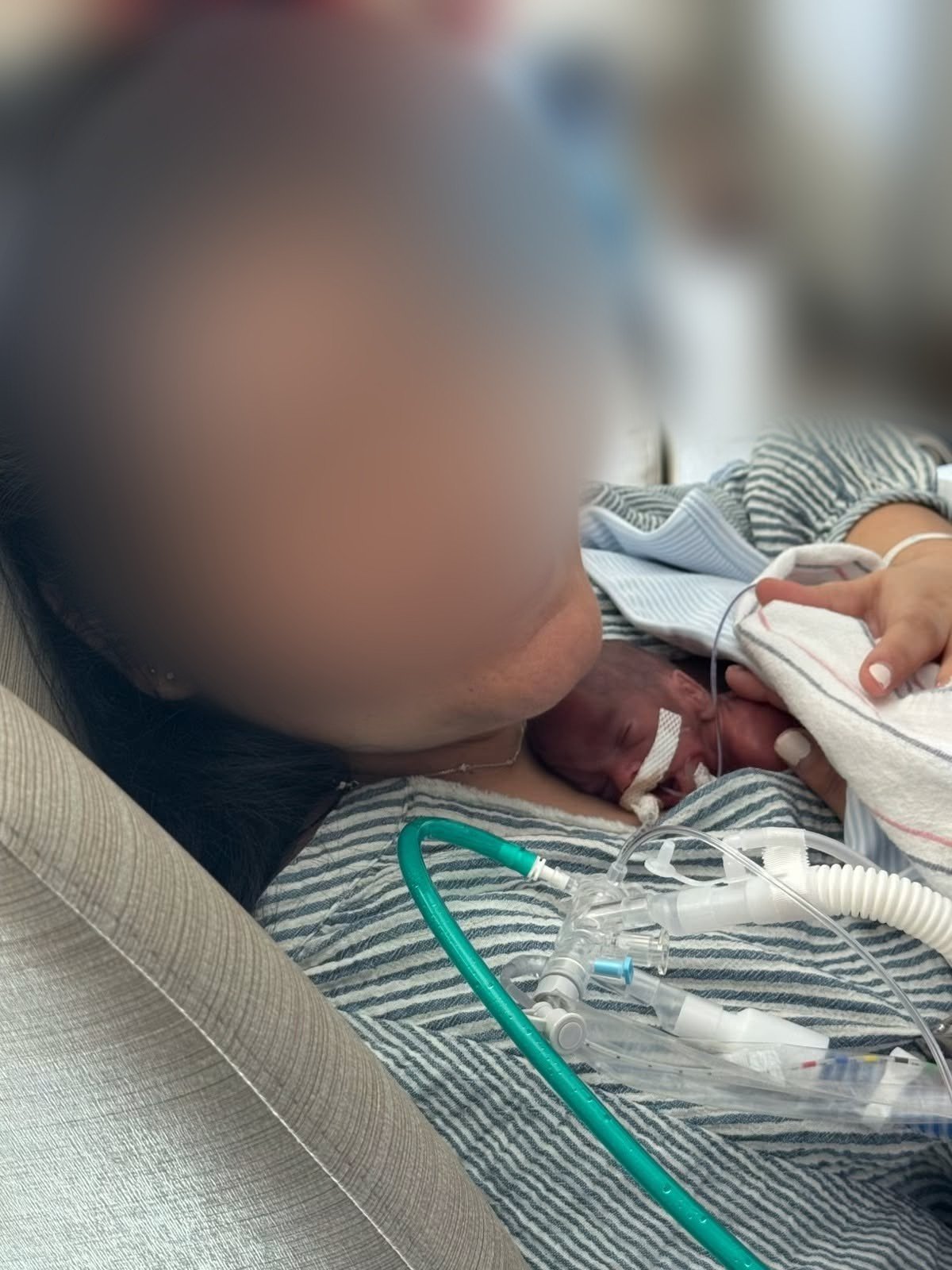
Yes, even very small babies on a ventilator can often be held skin to skin once the team agrees it is safe. The World Health Organization recommends kangaroo care as routine care for preterm and low-birth-weight babies. The first hold is a moment many parents never forget. See our picks for kangaroo care shirts and skin-to-skin wraps.
Brain checks
Babies born this early have a high risk of bleeding in the brain (intraventricular hemorrhage, or IVH), mostly in the first days of life. Routine head ultrasounds at the bedside look for it. In the JAMA study, 24.6% of babies born at 24 weeks had a severe bleed (grade 3 or 4), and 8.2% had cystic periventricular leukomalacia, a type of injury to the brain’s white matter. Ask your team to explain each ultrasound result in plain words.
Eye exams
Retinopathy of prematurity (ROP) is common at this age. For babies born at 22 to 26 weeks, the first eye exam is usually done at about 31 weeks postmenstrual age, which for a 24 weeker is about 7 weeks after birth. In the JAMA study, 31.8% of babies born at 24 weeks developed severe ROP, and 24.0% needed treatment. Treatment is effective for many babies, so these exams matter.
Infections and the gut
Very small babies are vulnerable to infection. In the JAMA study, about a third (33.5%) of babies born at 24 weeks had a late infection of the blood or the lining of the brain, and 11.6% developed NEC. Careful hand washing by everyone who visits is one of the most important things you can do. Many babies also need blood transfusions for anemia during their stay.
How long do 24 week preemies stay in the NICU?
Usually around 4 months, sometimes longer. In the JAMA study, babies born at 24 weeks who survived stayed in the hospital a median of 127 days. Half stayed between 108 and 156 days. That means many went home somewhere between about 39 and 46 weeks postmenstrual age, around or after their original due date.
The AAP says a preemie is ready to go home when they are breathing on their own, keeping their temperature steady, feeding by breast or bottle, and gaining weight steadily. Some 24 weekers go home with oxygen, a feeding tube, or monitors. That is common and does not mean something went wrong.
When that day gets close, use our NICU discharge checklist, our guide to car seats for small premature babies, and our preemie homecoming checklist.
RSV protection
RSV is a common winter virus that can make preemies very sick. The CDC recommends an RSV antibody shot for babies younger than 8 months in their first RSV season, unless the mother’s RSV vaccine during pregnancy already protects them. Babies with chronic lung disease of prematurity may also qualify in their second season. Ask your team what applies to your baby.
Your 24 weeker’s adjusted age
Because your baby was born about 16 weeks early, their adjusted age (also called corrected age) is about 4 months behind their actual age. At 6 months old, a baby born at 24 weeks has an adjusted age of about 2 months.
Use adjusted age for milestones until about age 2. Vaccines still follow actual age. Our adjusted age guide and free calculator does the math, and our preemie milestones chart by adjusted age shows what to look for.
Long-term outlook for babies born at 24 weeks
This is the part parents often ask about most, and the honest answer is: a wide range. Many children born at 24 weeks walk, talk, go to school, and live full lives. Many also need extra help, and some have lasting disabilities.
The JAMA study checked children again at about 2 years corrected age. Among those born at 24 weeks:
- 10.8% had moderate to severe cerebral palsy.
- 1.6% had vision loss in both eyes, and 2.3% needed hearing aids or cochlear implants.
- 54.9% had been back in the hospital at least once after going home.
Across all babies in that study born before 27 weeks, about half (nearly 49%) had no or only mild developmental impairment at age 2, about 29% had moderate impairment, and about 21% had severe impairment.
Early support makes a real difference. Most hospitals follow babies this small in a NICU follow-up clinic. The CDC explains that if your child is under 3, you can also contact your state’s early intervention program yourself, without a doctor’s referral. Services are free or low cost for children who qualify.
Are you 24 weeks pregnant and facing an early birth?
If birth may happen around 22 to 25 weeks, you will likely meet with a maternal-fetal medicine specialist and a neonatologist. They will talk with you about what to expect and about your choices, including whether to plan full intensive care for your baby. ACOG and the Society for Maternal-Fetal Medicine say this should be a shared decision that respects your family’s values. Comfort-focused (palliative) care is also a valid, loving option that some families choose after counseling.
If intensive care is planned, ACOG and SMFM recommend steroid shots at 24 to 25 weeks to help the baby’s lungs and lower serious risks. Doctors may also give magnesium sulfate before birth to help protect the baby’s brain. When possible, babies this early do best when born at a hospital with a high-level NICU.
Learn the 7 warning signs of preterm labor. If you notice any of them, call your doctor or midwife or go to labor and delivery right away.
24 weeks vs. 28 weeks: what’s different?
Four weeks makes a very big difference at this stage. In the same U.S. study, survival rose from about 70% at 24 weeks to 94% at 28 weeks, and serious complications such as severe brain bleeds and severe ROP were much less common at 28 weeks. If your baby was born a little later, read our guide to the 28 week preemie.
Taking care of you, too
A 24-week birth can turn your world upside down in an hour. Months in the NICU are exhausting: the pumping, the driving, the alarms, the decisions, the time away from other children or work. Many parents feel shock, guilt, grief, and fierce love all at the same time. None of it means you are doing anything wrong.
Please let people help you, and ask your NICU about social workers, parent mentors, and counseling. Our emotional support guide for NICU parents has seven practical ways to feel less alone, and our practical gifts for NICU parents list is easy to share with family who ask what you need.
When to call your baby’s doctor after going home
- You are worried about your baby’s breathing, feeding, color, or how sleepy they are. Your worry is enough reason to call.
- Your baby is eating much less than usual or has far fewer wet diapers.
- You think your baby may be sick or has a fever.
If your baby has trouble breathing, stops breathing, or turns blue or gray, call 911 right away.
Frequently asked questions
Can a baby born at 24 weeks survive?
Yes. In a large U.S. study of babies born from 2013 to 2018, about 7 in 10 babies born at 24 weeks survived to go home. Each baby’s chances depend on many factors, so ask your neonatologist about your baby.
Is a 24 week baby a micro preemie?
Yes, most people would call a 24 weeker a micro preemie. Doctors use the term extremely preterm.
How long will my 24 week preemie be in the NICU?
Often about 4 months. In the JAMA study, the median stay for survivors born at 24 weeks was 127 days, so many went home around or after their due date.
Will my 24 weeker have disabilities?
Some will, and many will not. At age 2, about half of the babies born before 27 weeks in the JAMA study had no or only mild developmental impairment. Regular follow-up and early intervention help children reach their potential.
When will my 24 weeker catch up?
The AAP says to use adjusted age for development until about age 2. Many babies born this early keep catching up for longer, and some need ongoing support. Celebrate each step on your child’s own timeline.
Sources
All sources checked on November 26, 2026.
- Bell EF, Hintz SR, Hansen NI, et al. Mortality, In-Hospital Morbidity, Care Practices, and 2-Year Outcomes for Extremely Preterm Infants in the US, 2013-2018. JAMA. 2022;327(3):248–263 (NIH PubMed Central).
- NICHD: Survival rate increases for extremely preterm infants in NIH-funded research network (2022)
- ACOG Obstetric Care Consensus: Periviable Birth (summary)
- ACOG and SMFM: Practice Advisory: Use of Antenatal Corticosteroids at 22 Weeks of Gestation (2021)
- Fenton TR, University of Calgary: 2025 size for gestational age at birth table
- Eichenwald EC, AAP Committee on Fetus and Newborn. Apnea of prematurity. Pediatrics. 2016;137(1):e20153757.
- American Academy of Pediatrics, HealthyChildren.org: Providing Breastmilk for Premature and Ill Newborns
- American Academy of Pediatrics: AAP updates clinical recommendations promoting use of human milk for preterm infants (2025)
- Study on suck-swallow-breathe coordination in preterm infants: PMC3669520 (NIH PubMed Central)
- World Health Organization: WHO advises immediate skin to skin care for survival of small and preterm babies (2022)
- Canadian Paediatric Society: Routine imaging of the preterm neonatal brain (reaffirmed 2026)
- American Academy of Ophthalmology / AAP: Screening Examination of Premature Infants for Retinopathy of Prematurity (2018)
- American Academy of Pediatrics, HealthyChildren.org: Going Home With Your Preemie
- CDC: RSV Immunization Guidance for Infants and Young Children
- American Academy of Pediatrics, HealthyChildren.org: Corrected Age for Preemies
- CDC: Learn the Signs. Act Early: early intervention contacts
- MSD Manual Professional: Preterm Labor (magnesium sulfate before 32 weeks)
This article is for general information only and does not replace advice from your baby’s doctor or NICU team. See our full medical disclaimer.
Save this for later
Pin this to your Pinterest board so it is easy to find, or share it with a family whose baby just arrived very early.

Similar Posts